With the ever-changing trends in today's society, the requirements for the performance industry are becoming increasingly standardized and strict. Following the changes in technology, the equipment needed for today's performances is also diverse, which makes us take performances more seriously...
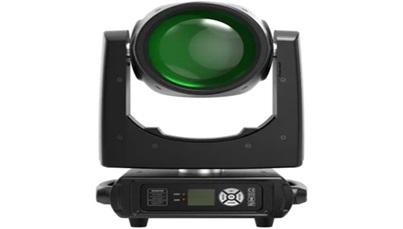
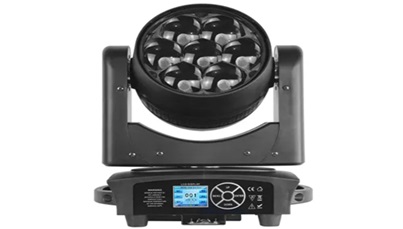
Today we introduce a commonly used computer moving head light in performances, referred to as a moving head light. It has many functions and powerful capabilities.
1. Introduction to the functions of the moving head light:
The functions of the moving head light include: on/off (the white kind), X-axis (left and right rotational movement), Y-axis (up and down rotational movement), color wheel (contains many colors that can be changed), patterns (can set corresponding pattern designs), self-rotating patterns (set to self-rotate), prism, focus (clear lighting at different distances), X-axis fine-tuning and Y-axis fine-tuning, strobe (light color flashes at fixed time intervals), diffusion (transition from solid to virtual or from virtual to solid), etc.;
2. Connections and precautions for moving head lights:
The operation of the moving head light should first pay attention to the connection method. The signal line and power line generally follow the same in and out principle, which means either all are male (metal rods protruding inside for contact) in series, usually ten in a series or an assigned number/voltage wattage in a series, then connected to a signal controller, and the power connected to the power distribution cabinet, waiting for the power to activate the lights.
3. Debugging and control of moving head lights
1. When debugging the connection of the moving head light, first ensure whether the locking buckle of the moving head light is unlocked and try to rotate it up, down, left, and right. Next, check if all the light switches are turned on. Note: (Unlike dye lights, floodlights, front lights, and red curtain lights, the moving head light does not have a power switch and can be used immediately upon startup), which is the preparatory work;
2. Once the power of the moving head light starts, first recheck the signal line, then check back from the power to ensure no issues. After the moving head light program starts, you can test the preliminary setup of the light field, then adjust the address code of the moving head light, and finally, according to the electronic address code of the moving head light, test the light control. Hereafter, program the N connected moving head lights, marking what is needed for each group, making it easier to control during performances.
Note: The classification of moving head lights is related to their voltage. The operation described can be followed for the same brand. For moving head lights of the same brand but different voltages, those with the same voltage should be connected in the same line;
Different brands of moving head lights require different connection methods. For example, the moving head lights of brand A and brand S should be connected with multiple signal lines due to voltage differences. Those with higher voltage can use one power line, and the signal line can undergo conversion connections. The moving head lights with lower voltage follow the same principle but need to be connected via a separate power cabinet.