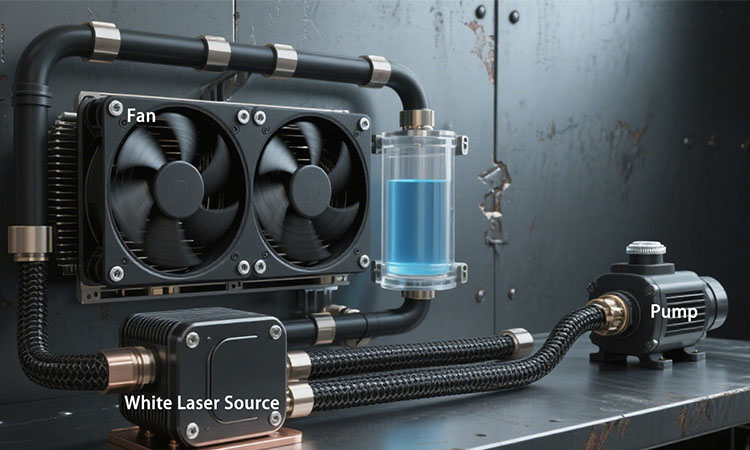
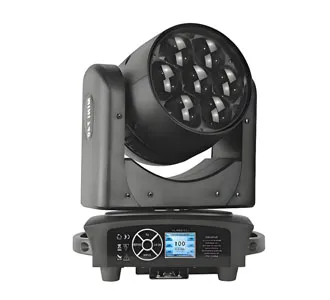
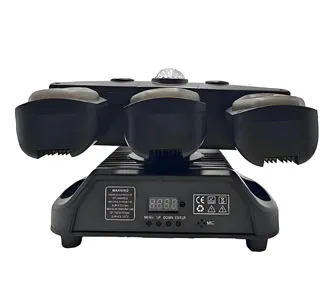
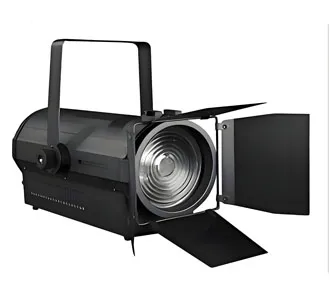
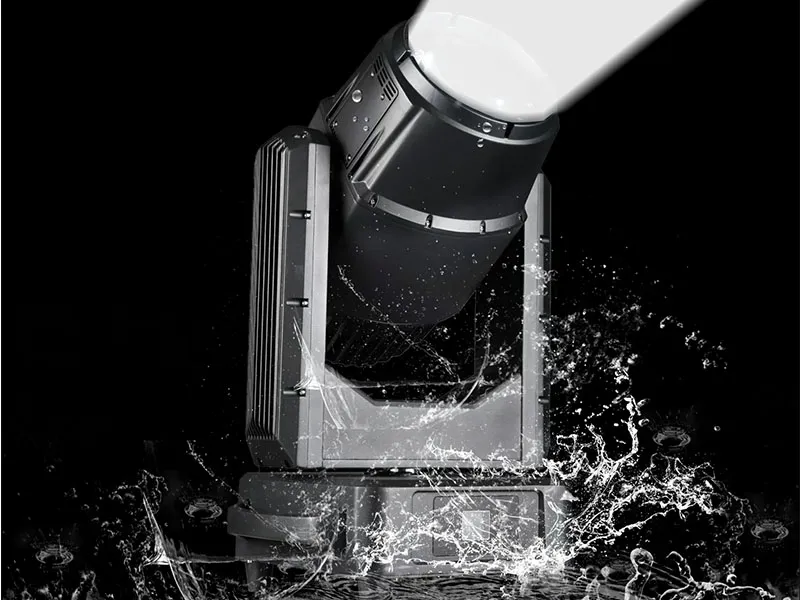
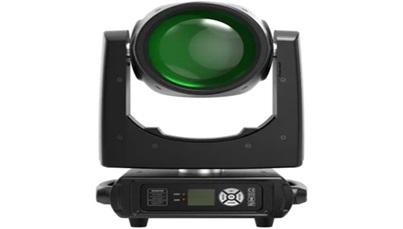
Heat Dissipation Efficiency Traditional air cooling relies on fans and fins, which are prone to heat accumulation; water cooling, leveraging the high thermal conductivity of liquids, increases heat dissipation speed by over 30%, preventing high temperatures even with dense arrangements.
Noise Control Traditional air cooling produces significant fan noise, interfering with acoustic scenarios; water cooling features low-speed fans or fanless designs, with noise levels below 30 decibels, suitable for quiet environments.
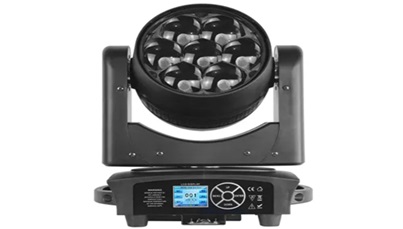
Device Form Factor Traditional fixtures have large volumes due to cooling components, limiting installation; water cooling eliminates the need for large fins, reducing volume by 40% and enabling flexible installation.
Stability Traditional cooling requires power reduction at high temperatures, causing unstable lighting; water cooling maintains core temperatures below 60°C, allowing sustained full-power operation and preventing accidents.
This upgrade from passive defense to active management makes water cooling a performance enabler for stage lighting.